Considered an avant-garde novelty, the De Stijl movement was at first treated as outrageous and meaningless (Piper, n.d.). The movement was defined by straight lines, right angles, and color was limited to red, yellow, blue, neutrals, white, black, and grey.
“But in the minds at least of the artists concerned these stark essentials were radiant with symbolic life, and reflected an underlying ideal unity and harmony of the universe.”
(Piper, n.d.)
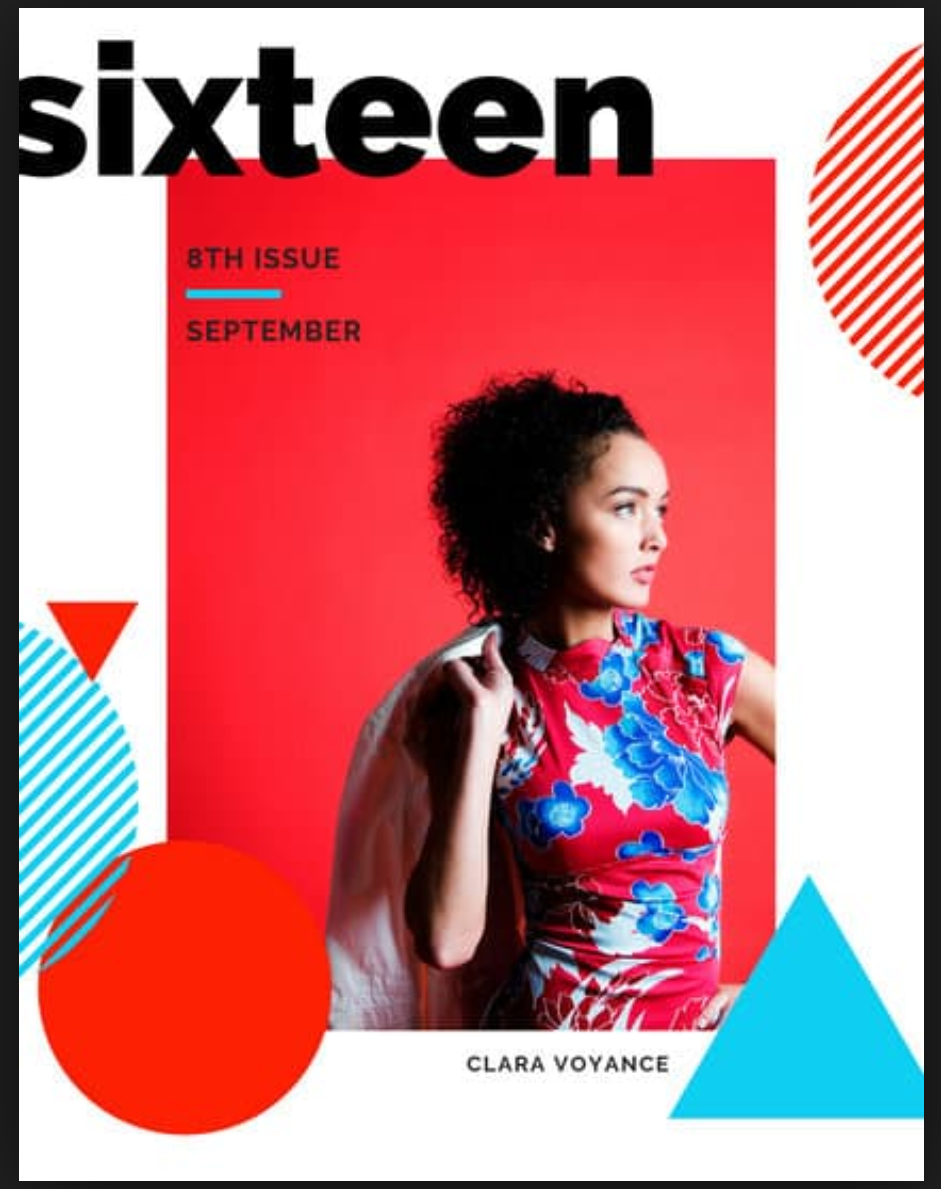
It was said that the basic facts of nature were discovered through the vertical and horizontal shapes while the primary colors or red, blue, and yellow represented emotions and black and white represented night versus day. I wonder if it just happened this way, or if the artists of the De Stijl movement has planned to use these techniques beforehand and before producing any art. This modern magazine cover encompasses the elements of the De Stijl movement. For example, the straight lines and angles forming geographic shapes and the use of solely red and blue colors. I do think in this specific modern day; however, that the shapes and colors are not meant to represent anything like abstract and geometrical art during the De Stijl movement did. I think the magazine cover’s geometrical red and blue design is meant to artistically compliment the model and their clothing on the cover.
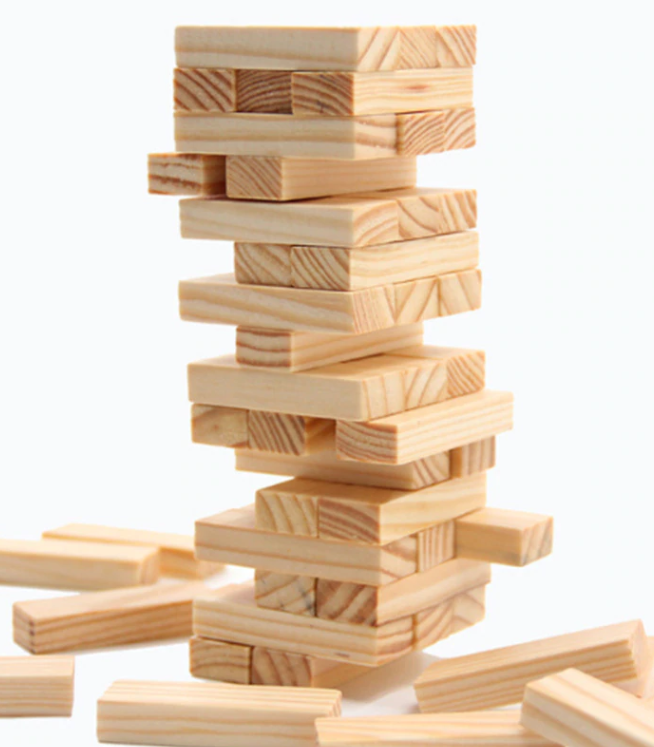
After reading about the Vantongerloo Construction of Volume Relations piece from year 1921 (Piper, n.d.), I saw an unwavering resemblance to the stature and build of a wooden-built game well known to us today, Jenga. In the early 1900s, the art was said to be “balanced with an unarguable finality.” Other words used to describe art during the De Stijl movement were precise and symmetrical. Just like the modern day Jenga game, each piece is a horizontal block formed by wood cut into straight lines. They each align perfectly, symmetrically, and balance when properly weighted. It may be total coincidence that this game was created, but I do believe inspiration in the game’s symmetry and balance could be drawn from aspects of art from the De Stijl movement.
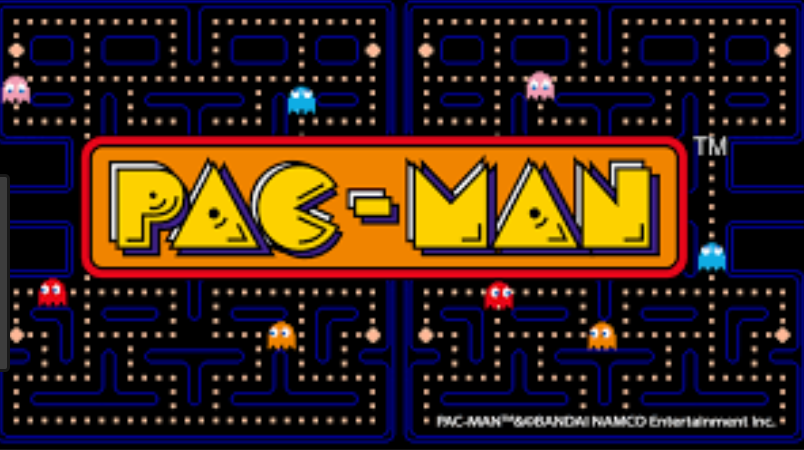
Similar to the game Jenga, which has a harmonious aspect to its design where each piece fits perfectly next to each other, is the game Pac-Man. During the De Stijl period, the use of black and white colors eventually phased out leaving heavy use of the primary colors red, yellow, and blue. Much like Mondrian’s Broadway Boogie Woogie piece (Piper, n.d.), the Pac-Man game is a busy grid made up of those same primary colors. The Broadway Boogie Woogie is inspired by the busy Manhattan street grid. The piece is dizzying and colorful very similar to the busy Pac-Man grid. Pac-Man is an art form. The lines and grids form a perfect puzzling path very much inspired by the complex compositions of the De Stijl period.
“The harmony and order was established through a reduction of elements to pure geometric forms and primary colors.”
(Flask, n.d.)
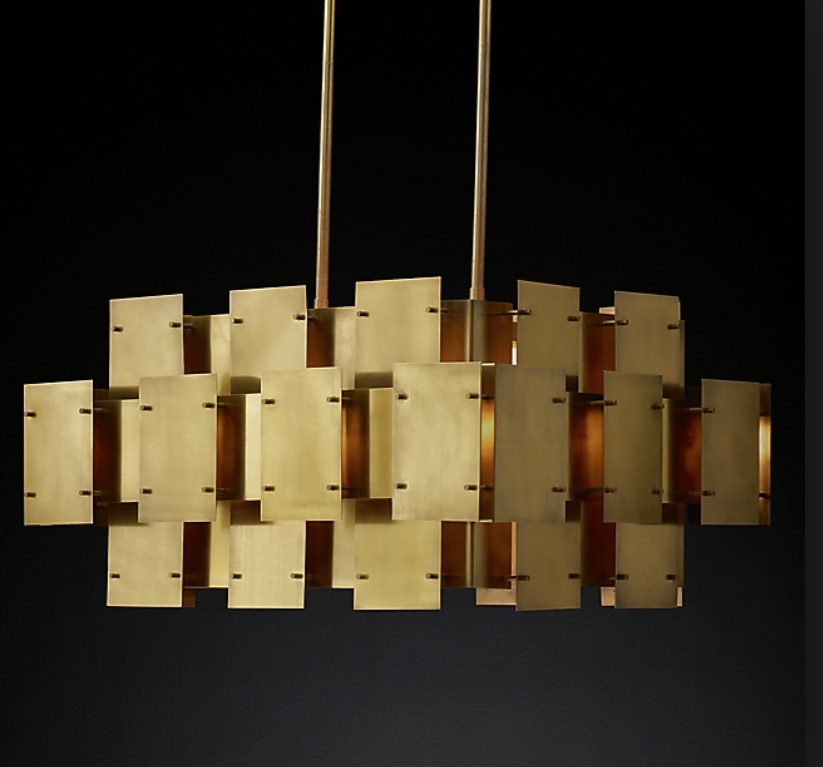
Constructivism was inspired by Cubism in Paris, and Picasso (Piper, n.d.). Artists visited Picasso in Paris at the time and saw his three-dimensional constructions made up of different materials such as sheet metal, wood, and wire. “A basic concern of Russian Constructivist sculpture was to be the treatment of space rather than of mass. The void was as important as the solid” (Piper, n.d.). This modern-day chandelier is made up of the similar three-dimensional constructions in what looks to be a material similar to sheet metal. Much like artwork at the time of the Constructivist period, the chandelier is geometrically developed and suspects from the ceiling. Each empty space has purpose and creates a shape, and each piece of metal creates a shape, working together harmoniously to form a perfectly geometrical, symmetrical grid.
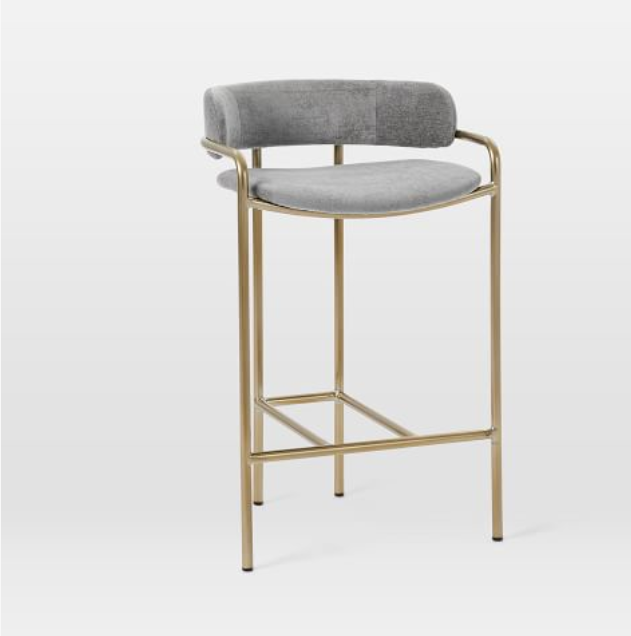
It is funny how when we look around our house, we don’t necessarily see art in every corner. However, reading about De Stijl and how art is created from geometric perfection and even created by the empty spaces between objects has taught me that art is in fact everywhere. Straight lines, angles, geometric shapes, and empty space exist everywhere and do not change with time. Simply combining these elements creates art. Aesthetic inspiration from art from the early 1900s lives on today within games and even in furniture like this geometric shaped barstool shown. games, to furniture. Resembling Tatlin’s Bent-tube chair from 1923 (Piper, n.d.), this stool incorporates metal and fabric for an innovatory design. “The natural world was translated into a stark pictorial language of shapes, lines, and angles” (Goldstein, 2014).
Sources:
Flask, D. (n.d.). Retrieved from http://www.designishistory.com/1920/de-stijl/
Goldstein, A. M., & Goldstein, A. M. (2014, August 16). What Makes Geometric Abstraction So Exciting? Retrieved from https://www.artspace.com/magazine/art_101/art_market/art_101_geometric_abstraction-5788
Piper, D. (n.d.). De Stijl and Russian Art. In The History of Art II.
 Chloe - History of Communication Design 2019