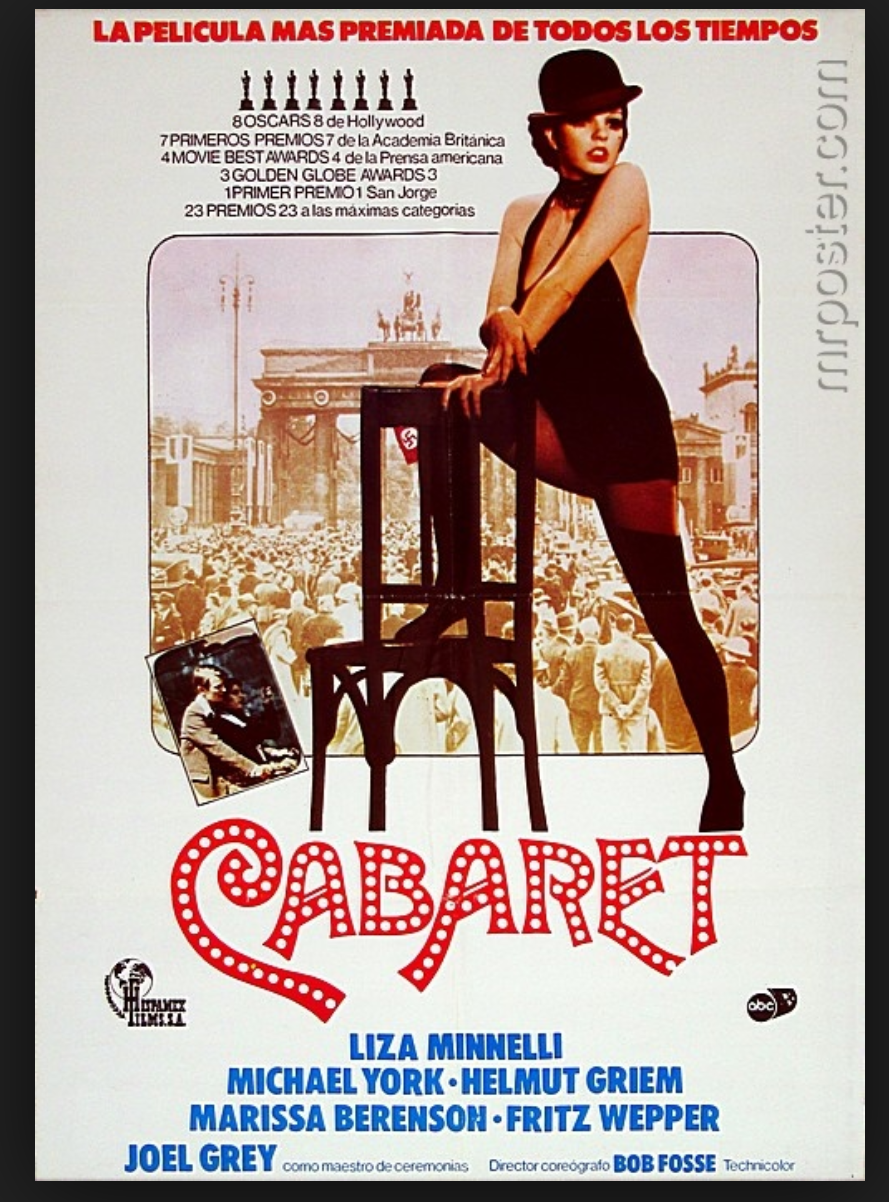
Reading about Das Plakat, a journal championing the collecting of European art posters in the early 1900’s (Eskilson, Schplakat, & Dada, n.d.) instantaneously reminded me of an art poster that used to hang in my room as a teen. Das Plakat was a collectors group covering the poster scene and exploring cultural aesthetic and legal issues about graphic design. They mostly surveyed significant German and international work, addressing themes such as originality, plagiarism, and politics (Eskilson, Schplakat, & Dada, n.d.). I happen to know the plot of the musical Cabaret, the musical in which the poster shown above represents, and that it takes place in Berlin, Germany post World War I. This was a time when the Nazi Party was on the rise. This poster touches on similar artistic and culture aspects to those that Das Plakat studies in the early 1900’s. For example, note the Nazi flag waving in the background behind character, Sally Bowles. The poster tells a story and due to the background imagery showing Germany post WWI, it is time stamped, historical, political, and powerful. Das Plakat was the invention of Hans Josef Sachs (Eskilson, Schplakat, & Dada, n.d.).
“Without Sachs’s dedication, German commercial art would have developed anyway, but as editor of Das Plakat he almost single-handedly promoted German Gebrauchsgraphik (commercial art) into an internationally respected applied artform.”
(Eskilson, Schplakat, & Dada, n.d.)
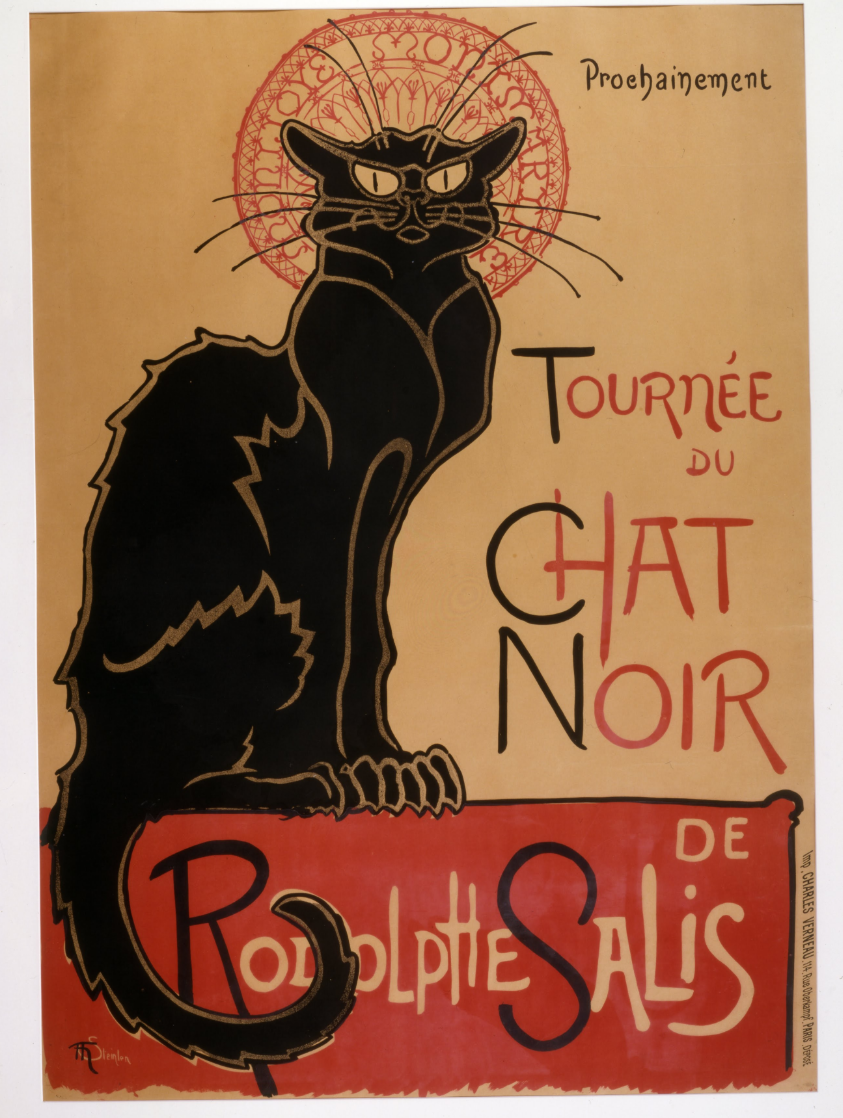
Continuing the conversation on Das Plakat, I cannot think of any group that is similar today or still in existence. It fascinates me that Sachs was a chemist by trade, dentist by profession, yet became the largest poster collector in Germany (Eskilson, Schplakat, & Dada, n.d.). “As a teenager he was obsessed with collecting French posters, and in his twenties became the leading private collector in Germany, with thousands of acquisitions.” He was only 24 years old and built a national organization and board of directors in support of poster art. Fast forward to today, and certain art posters have become iconic and timeless. Take the Chat Noir poster, for example. Translating to “black cat”, the Chat Noir was a famous cabaret venue in the 1800’s. Known for its atmosphere of creativity, innovation, and improvisation, it became a place for Parisians to gather (1stDibs, n.d.). Again, we see the same underlying social and political themes that Das Plakat surveyed appear in what the Chat Noir poster actually represents. Similar to the Cabaret poster, the Chat Noir poster is also a historical time piece representing a time of artistic freedom, creativity, and a place where politics and ideals could be openly discussed. There is so much more represented behind just the art in these posters. The art was a vehicle to communicate history and political messages.
“It was not just a place to be entertained, but a place for socializing, the discussion of politics and ideals, and a place of excesses and rule breaking. The Chat Noir set the bar for the cabaret in Paris and throughout the world.”
(1stDibs, n.d.)
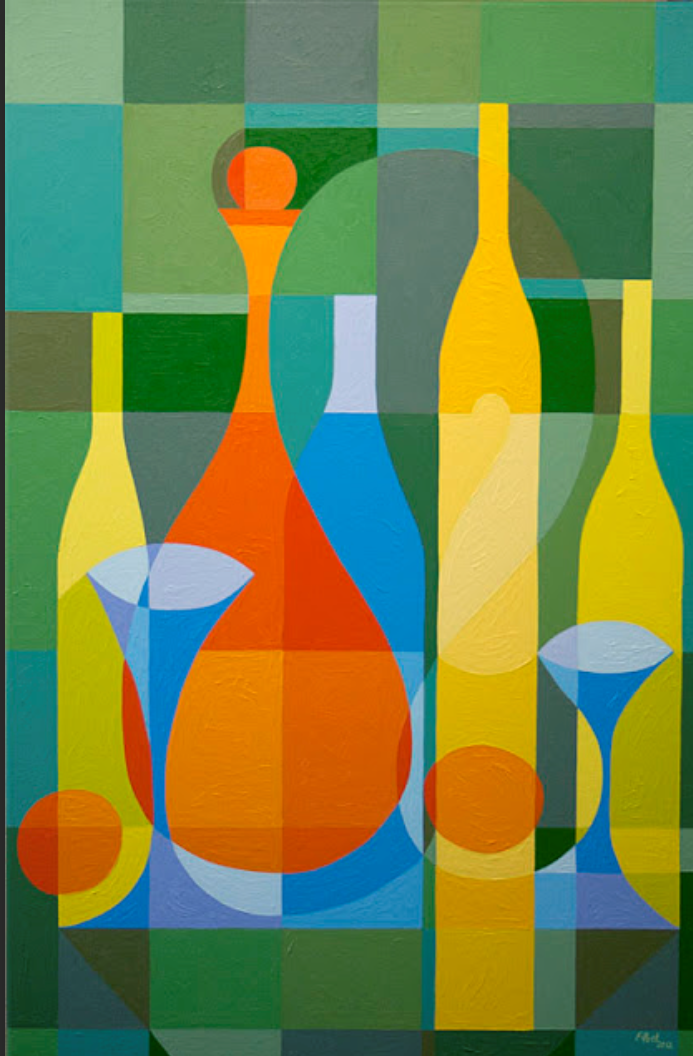
With just a quick internet search, I was able to locate dozens of modern art examples of still life. Giorgio Morandi was associated with the Metaphysical school and lived from 1890-1964 (Piper & Dadais, n.d.). His work was similar to this example shown in that his still life paintings were well-defined but were not portrayed according to realistic expectations. For example, illogical structures were presented or shadows that did not exist in real life were painted (Piper & Dadais, n.d.). Much like this example above, the viewer of the art knows this is a still life of vases; however, the shapes have a bit of creative stretch to them and colors are obviously far from realistic.

If you’ve read any political news or watched the news on the television lately, then you may recognize this image. Artist Dada, who began making waves with his art around the time of WWI, created images the world had never seen before. Dadaists were said to be “repulsed by self-styled enlightened societies that fawned over pretty paintings while dispatching youths by the millions to their deaths” (Levitch, n.d.). The article on Dadaists also explains their goal of art which was to compel people to confront life’s ugly realities. While we might not look at the picture shown above and think that it is “art”, it is still communicating an important message, which was what Dadaists believed in. Ultimately, art is meant to communicate a feeling, meaning, metaphor, or message to a view. So whether that feeling is pleasant or not, this photograph above is still accomplishing something that makes it “art”. It is making society dig deeper into their feelings to consider the political and social climate that exists today.
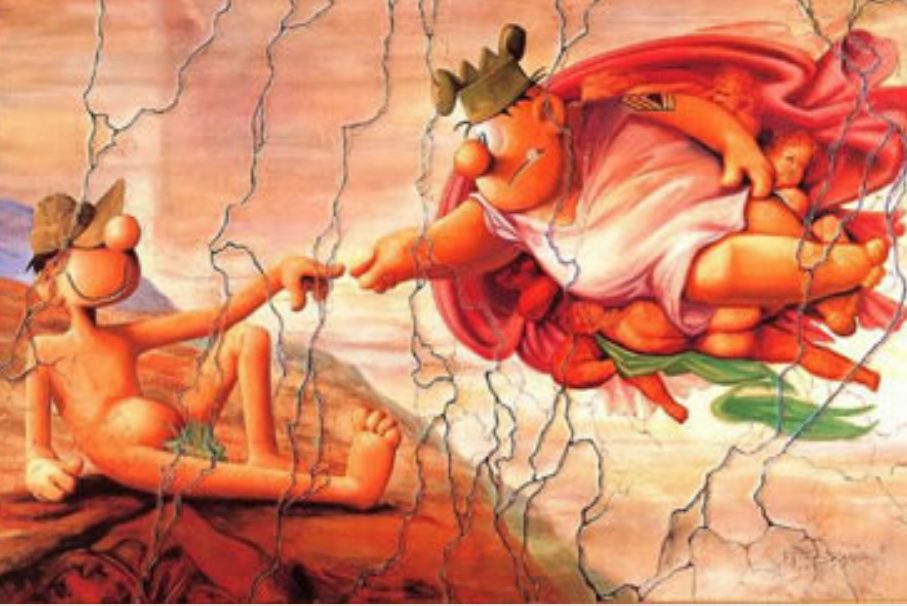
Today, we see so many reproductions of famous paintings that we almost don’t think anything of it at all. When we see a funny piece of art mocking an original famous piece, we recognize the piece it is mocking but do not consider there was actually an artist who did this first. I found much humor in the reading speaking of artist, Dada, and the anti-masterpiece.
“Dadaists found oil paintings pretentious, and they ridiculed art history’s elite.”
(Levitch, n.d.)
Dadas continued his many attacks against fine art. Even by adding a mustache to the famous Mona Lisa painting much like the example shown above mocking Leonardo DaVinci’s famous painting by depicting it similarly, but in a humorous way tweaking the appearance of the characters in the image.
Sources:
Eskilson, S. (2019). Graphic design: A new history. New Haven, CT: Yale University Press.
Heller, S. (1999). Design literacy (continued): Understanding graphic design. New York: Allworth Press.
Levitch, M. (n.d.). Dada Student Guide: National Gallery of Art.
Original 1896 Chat Noir Poster by Steinlen for the Black Cat French Cabaret. (n.d.). Retrieved from https://www.1stdibs.com/furniture/wall-decorations/posters/original-1896-chat-noir-poster-steinlen-black-cat-french-cabaret/id-f_4326123/
 Chloe - History of Communication Design 2019