Image Sorting is a method used to find out peoples’ associations and perceptions of particular topics (Kumar, 2016). The discussions that the images initiate reveals emotions, perceptions, thoughts, and values. For example, two people may look at the same image and have completely separate thoughts. One person may associate that image with something opposite of the other person. Taking a non-traditional approach, design researchers might use image sorting is to spark story-telling (Olsen-Landis, 2017).
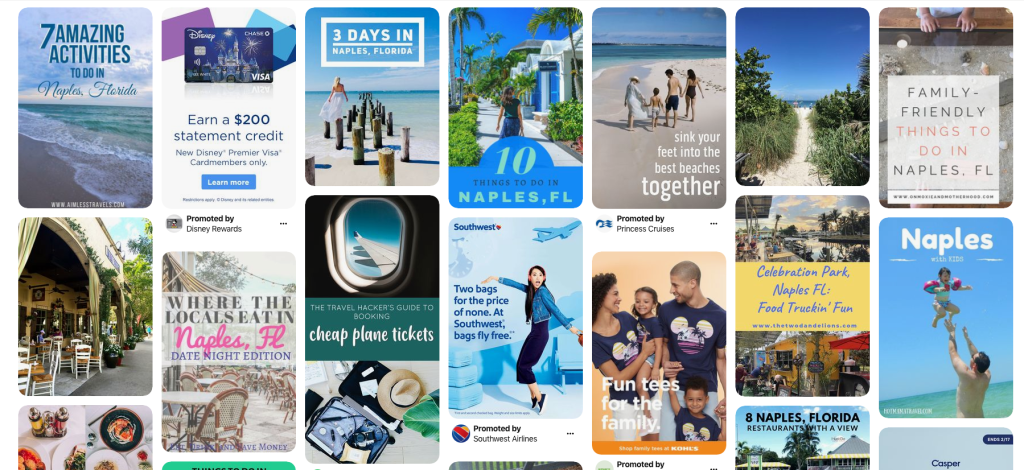
I chose to conduct a digital image sorting session with a couple of my friends via Skype. As seen below, I used a Pinterest board of Naples, FL to gather my 30 images based on the theme of our well-known town nearby, Naples, FL.
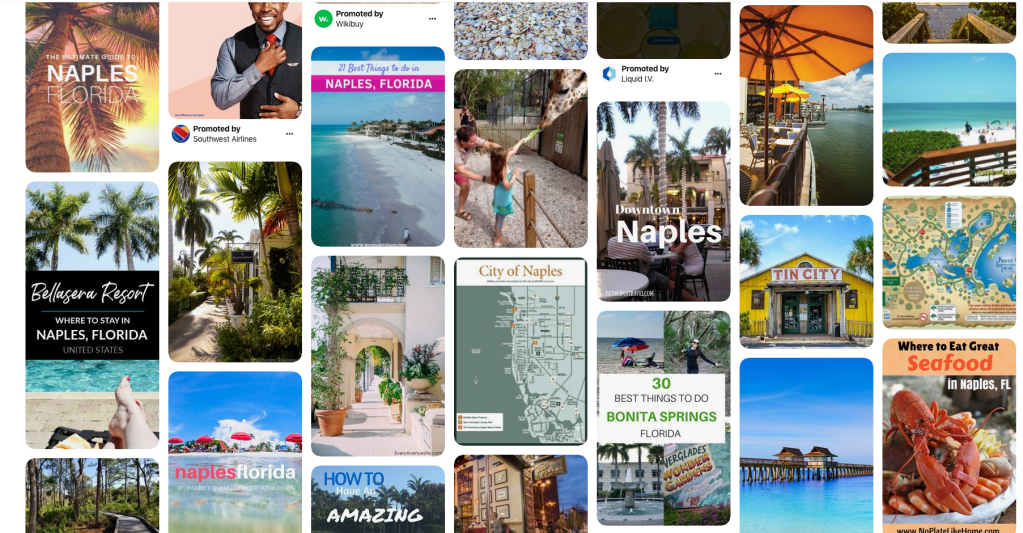
In this research experiment, I will call my two friends individuals A and B. Individual A had a very literal approach. They saw a photo of a Disney credit card and associated it to a family wearing Mickey Tees, seashells and associated it to a father and daughter at the beach, and the plates and associated the image to what appears to be a restaurant. Additionally, they associated the airplane to the image that portrayed logo of Southwest airlines. In these associations, the relationship is self-explanatory. When asked why they sorted the images the way they did, individual A said, “These items make sense to go together because they are of the same topic or idea. It makes sense to pair them with their closest related topic.
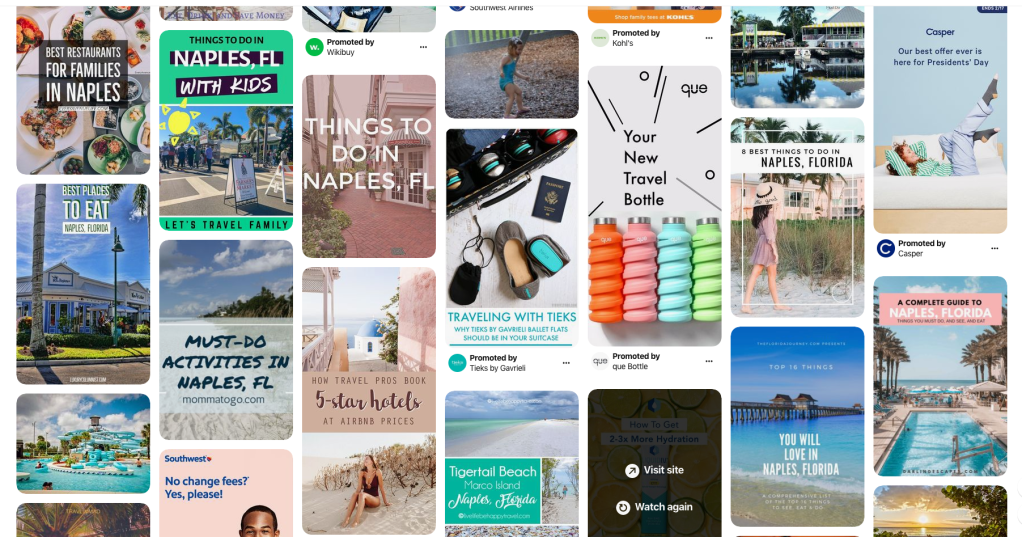
Individual B had a less literal approach to sorting the images. They paired the airplane image to the beach, the playground picture to the water, and the person walking with the restaurant. Individual B explained that they paired the airplane image to the beach because it is a method of travel to get to the beach and someone might jump on a plane to take a vacation in Naples, FL. The playground picture was paired with the water photo because they are both activities and things to do/places to go to. And finally, the person walking on the beach was paired to the restaurant because someone may walk to dinner.
To me, Individual B’s method of sorting the image told much more of a story than individual A’s method. Individual B’s method allowed me to envision what a person might do in Naples and the places they would go and how they would get to them.
As our reading states, “This exercise sparks a conversation about abstract ideas and feeling that otherwise may remain undetected in a traditional Ethnographic Interview” (Kumar, 2016).
References:
Kumar, Vijay. 101 Design Methods: A Structured Approach for Driving Innovation in Your Organization.. [Vault eBooks].
Olsen-Landis, C.-A. (2020, January 30). Card sorting: a powerful, simple research method. Retrieved from https://medium.com/design-ibm/card-sorting-a-powerful-simple-research-method-9d1566be9b62
(n.d.). Retrieved from https://www.pinterest.com/search/pins/?q=naples, fl&rs=typed&term_meta[]=fl|typed
 Chloe - History of Communication Design 2019