Design is defined as a plan or drawing produced to show the look and function or workings of a building, garment, or another object before it is built or made. According to form vs. function, the definition of design contradicts stances that several articles have taken on form and function. The design may not be able to accomplish showing both the look, or form, and function of something. Take, for example, the iPod which proves that in design, the function is more important.
In a New York Times article, ‘The Demise of Form Follows Function’, author Alice Rawsthorn wrote, “How could you be expected to guess what that tiny metal box does by looking at it? There are no clues to suggest that it might play music. Like most other digital devices, the Shuffle is (literally) an inscrutable box of tricks” (2009).
While the iPod looks simplistic, Apple was purposeful in their design solutions addressing both form and function, but mostly function. They managed to create a form that is sleek, simple, and small, while still serving multiple functions. The iPod’s function outweighs its form when it comes to design. Apple was purposeful in creating something that accomplished a great goal with its function. How did they accomplish this? By keeping the form of their design sleek and portable, it allowed them to accomplish the goal of creating an item that is highly functional, yet portable.
Systems thinking allows an individual to look at all items of a whole, rather than just one part of the design process (Karjaluoto, 2014). As a designer, it is important to assess the goals of the design project. For example, who is the design for? What is its purpose? There may be specific requests from a client or brand guidelines that need to be met. Or perhaps, the design is aiming to accomplish a rebrand or realign a brand to its mission through imagery. Whatever the purpose, systems thinking allows the designer to focus on the goals of the project and meet them through the creative process.
Innovation is defined as a viable offering that is new to a specific context and time, creating user and provider value (Kumar, 2013).
Companies like Apple come to mind when it comes to innovation. Take, again, the iPod, for example, or even the iPad. These were created intentionally to be simplistic in design, yet robust in function which provides a lot of value on the user end.
In conclusion, innovation and systems are both crucial pieces of the design process. Design is not just about creativity and appearance; it is about function as well. Function, in the case of technology, has proved to be the most important aspect of the design process. Technologically designed items have specific goals to meet to provide users with value.
The informational graphic example is given shows one of the early Apple desktop computer models in the 1900’s. The other image is an iPad from modern-day times.
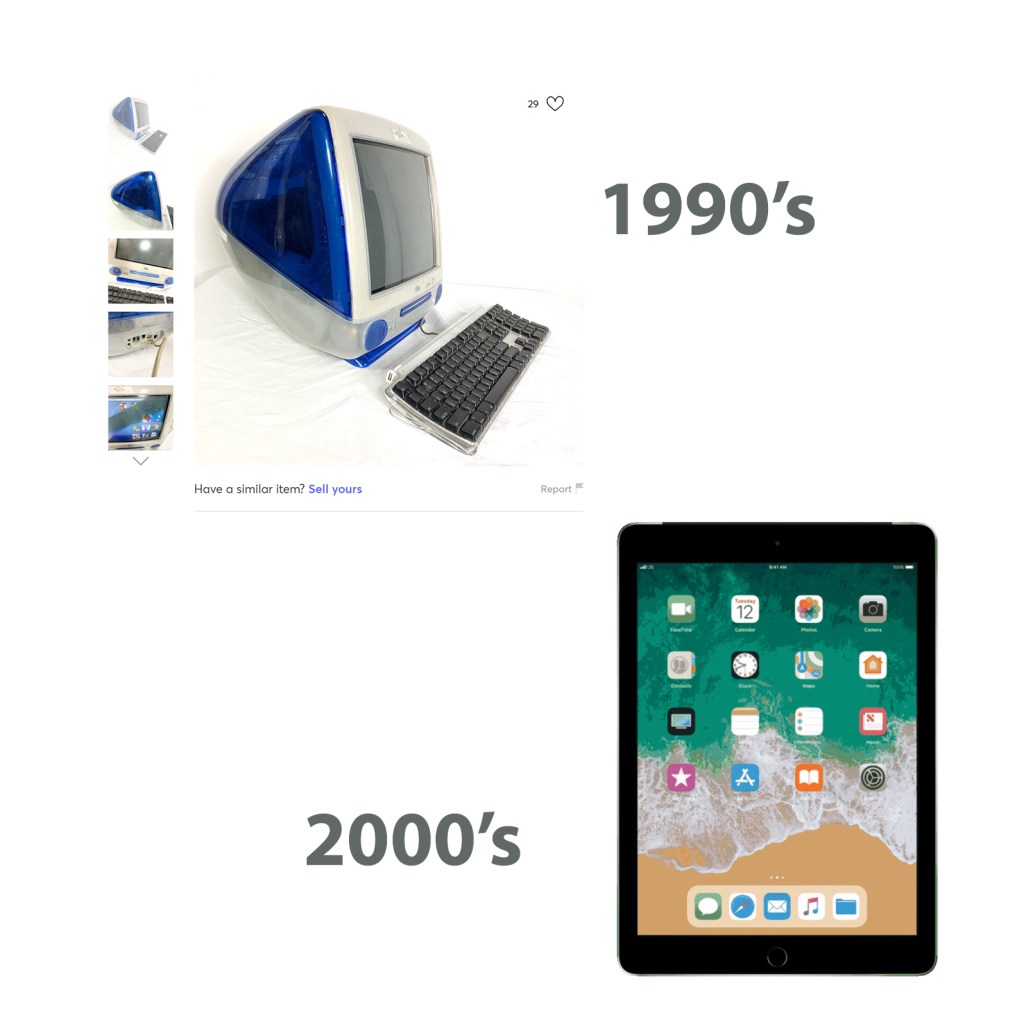
While both have similar functions, their form has drastically evolved in time.
References:
Karjaluoto, Eric. Design Method, The: A Philosophy and Process for Functional Visual Communication. [Vault eBooks]. Retrieved from https://www.vaultebooks.com/#/books/9780133438949/
Kumar, V. 101 Design Methods: A Structured Approach for Driving Innovation in Your Organization. [Vault eBooks]. Retrieved from https://www.vaultebooks.com/#/books/9781118392195/
Rawsthorn, A. (2009, May 30). The Demise of ‘Form Follows Function’. Retrieved from https://www.nytimes.com/2009/06/01/arts/01iht-DESIGN1.html?pagewanted=all&_r=0
 Chloe - History of Communication Design 2019