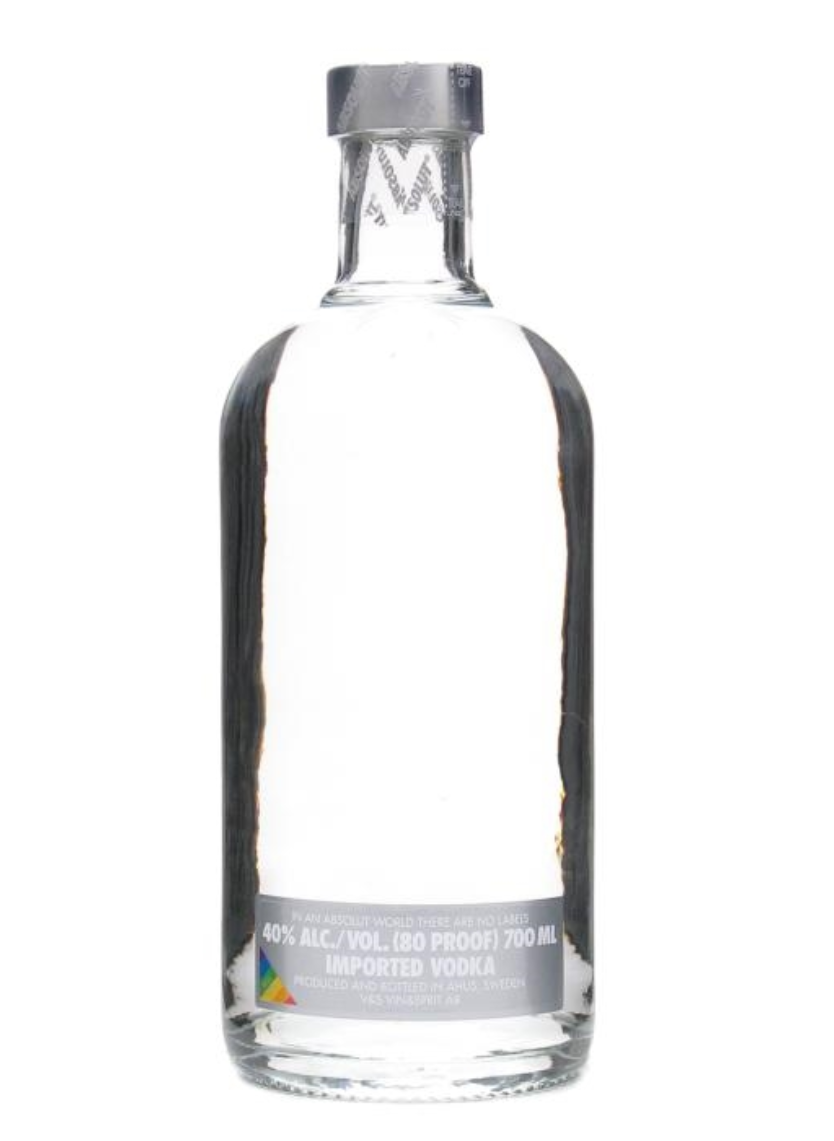
In 2009, major brand, Absolut Vodka, launched an edition of their bottle with no label. The company’s global public relations manager, Kristina Hagbard, explained that “For the first time we dare to face the world completely naked. We launch a bottle with no label and no logo, to manifest the idea that no matter what’s on the outside, it’s the inside that really matters” (Klein, 2010). This is incredibly bold considering the fact that we live in a country so heavily impacted by corporate America, branding, and labels. By the end of the 1990’s, protests began against corporate power (Poyner, n.d.). A graphic of the American flag was created as a protest image for group, Adbusters, in the early 2000s. The flag displayed the logos of corporate America companies such as Disney, Exxon, Cocoa Cola, ABC, Nike, McDonald’s, and so on. While parts of the population continued to protest the politics and control that come with corporate America, and Adbusters continued to protest, several brands took it upon themselves to “de-brand”. For example, following Absolut Vodka’s “label-less” bottle, Starbucks launched an unbranded coffee shop in Seattle nicknamed “stealth Starbucks”. After spending two decades blasting its logo on to 16,000 stores worldwide, Starbucks was now trying to escape its own brand (Klein, 2010). I think it is a testament to just how powerful the imagery, branding, and a logo can be. So much so that by simply removing a label, a company is pulling a huge national PR stunt. For a brand to go “brandless”, they must already have a strong enough brand aesthetic that going incognito works in their favor. Genius PR stunt!
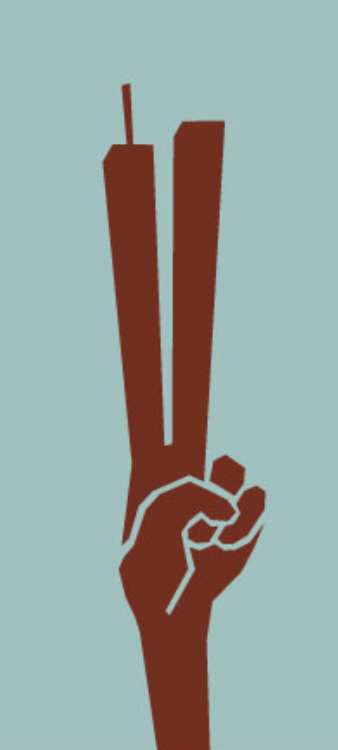
At first glance, this image is so universally powerful. First, we see a hand creating a peace sign to symbolize peace. Then, we see that the first two fingers on the hand have been artistically altered to reference the twin towers. Around the time protests against corporate America began to happen, the American Institute of Graphic Arts (AIGA) started a national design conference called, Voice (Poyner, n.d.). Following the September 11 events in 2001, they chose to cancel the conference; however, they decided to bring it back at a later date and call it Voice 2. The September 11 events provoked a profound need for designers, especially those living in New York, to find a way to use their skills to contribute (Poyner, n.d.). Many designers, both in New York and outside of New York, created images and words to help the public deal with the horrific events. The participants at the Voice 2 conference were incredibly motivated to help society with their designs at a time when America needed it most. I’ve always thought a lot about the word “heroes”, and how that relates to the 9/11 events. When I picture a hero, I picture the stereotype portrayed in movies. I picture strength, knights in shining armor, battle fields, and facing danger head on. Heroes; however, are everywhere and come in all shapes and sizes. The design movement following 9/11 proved just that. Of course, we absolutely identify the first responders during that time as heroes, but we’ve never considered artists. Without designers and artists, we would have no memory of 9/11 in our history books. Nothing to teach the next generation about peace and how horrible things can be, but also how beautiful people can be when they come together to help those in need. The imagery that remains from 9/11 is haunting, universal, and powerful. Just think, without designers, we would never have the new Freedom tower.
Something The Citizen Designer reading allowed me to consider was the term “design”. When I think of what design means, I picture colors, art, graphics, shapes, etc. Webster’s dictionary actually defines the word design as “to create, fashion, execute, or construct according to plan.” When we reconsider all that falls under design, the possibilities are limitless. As a society, we’ve seen a shift to the electronic sphere of design within the last 20-30 years.
“The shift of social transactions to the electronic sphere has the potential to change the conduct of human society as much as the factory system transformed the handicraft traditions that William Morris so adamantly defended.”
(Margolin, n.d.)
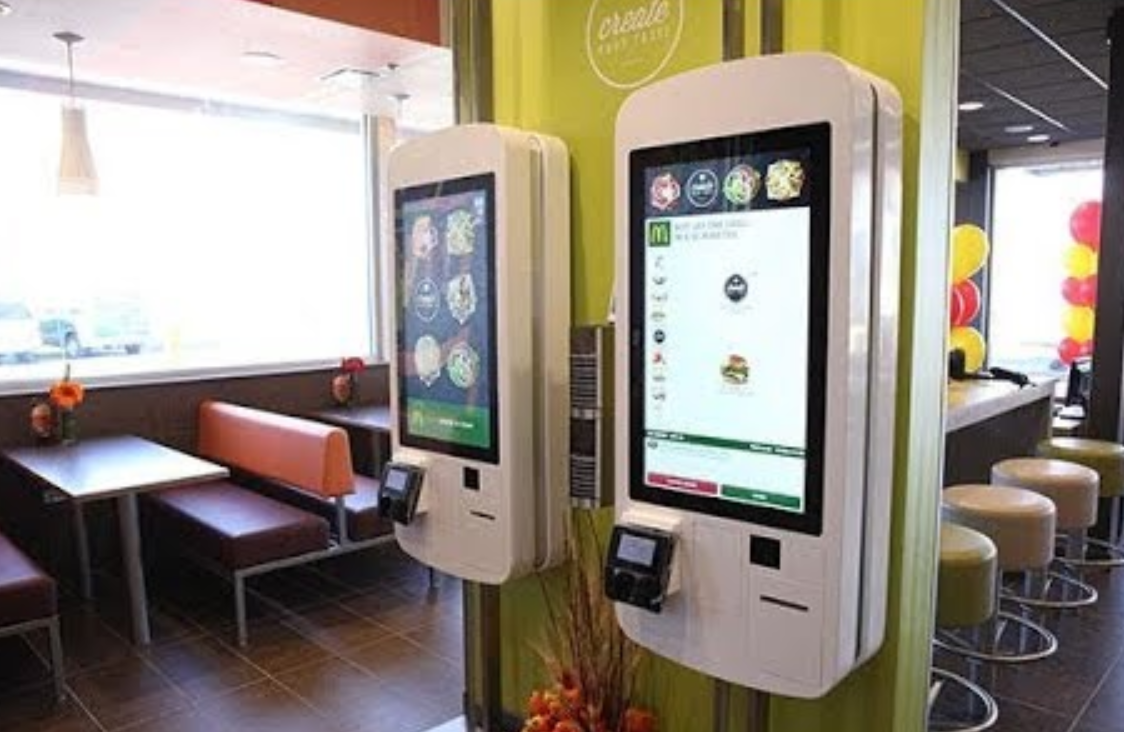
Consumers tend to be the victims of these systems that are created to save large corporations money. How many times have you called Comcast lately and had to dial 0 twenty times to reach the operator, or started getting frustrated because the voice recording wasn’t properly interpreting what you need? Too often. This is what we’re facing as a society, and believe it or not, these new systems are design. The photo I have above shows a self-ordering kiosk at McDonald’s. Somebody not only designed the software, but the look of the system, and then architecturally how the system physically would fit within a McDonald’s restaurant. Design is such a broad term and it surrounds us. Everything we see or touch was designed by someone and has some impact on society. Once we open our minds to this new way of thinking, the world looks a little different.
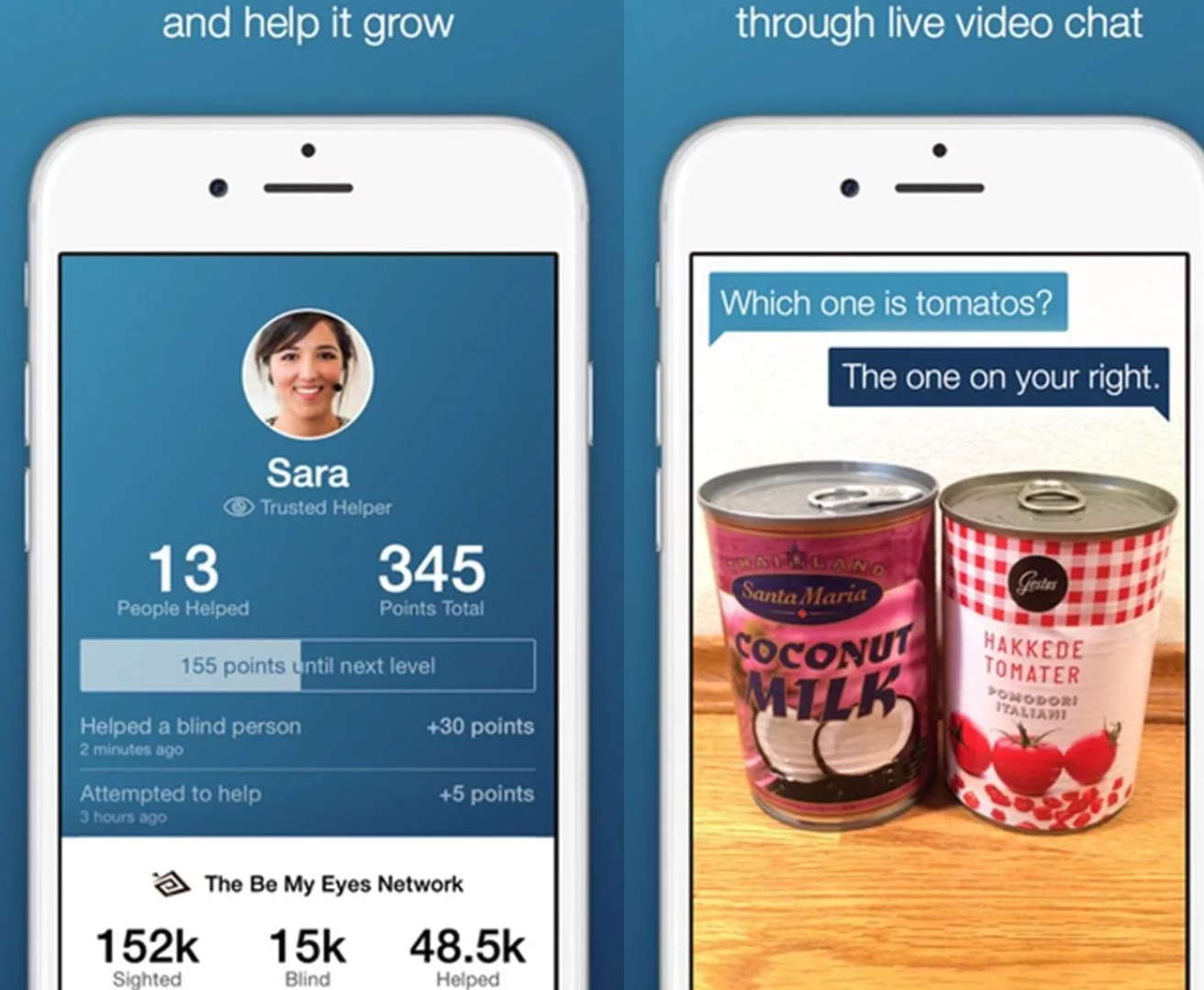
While self-checkout kiosks and automated systems are replacing jobs, there has been much positive change due to digital design as well. The photo shown is of an app that assists those who are blind called, “Be My Eyes”. It allows someone who is visually impaired to make a video call to someone who has their vision and get assistance from that person. They may help with simple tasks like matching a pair of shoes, or determining which can is tomatoes versus coconut milk like the image shown. Thank you to consumer advocates, designers are prompted to create amazing applications like this that benefit society. “Consumer advocates rather than designers have led the charge against companies that engage in unfair labor practices or manufacture products that are unsafe or not inaccessible to all users” (Margolin, n.d.). Again, I did not think of things like the airbag when I thought of the term design, but it was created in response to consumer advocate Ralph Nader’s book Unsafe at Any Speed. In response to social issues and consumer unfairness, designers come up with solutions to major issues.
“How do we live humanely in an age of rapid technological change?”
(Margolin, n.d.)
America is a consumer’s country. We’re surrounded by brand names and logos almost to the point where we don’t even notice anymore. Rather than seeing concert venues with unique names, we’re seeing concert venues with names like “AT&T Stadium” or “T-Mobile Arena”. Even the clothing we wear is a walking advertisement. Men’s polo shirts are commonly known for having a small brand logo stitched on the right side chest pocket. Just from noticing that logo we can assess an individual’s style, taste, class, age, etc. Also, if you’ve shopped in the Target clothing department recently, you would have noticed the t-shirts for men and women representing brands such as Coca Cola, Disney, Marvel, and NASA. The list goes on. We are becoming walking advertisements without even knowing it, or without being paid for it! We have to stop and ask ourselves; Is this a humane life? “Materialism is a significant factor. It drives manufacturing and incorporates a sense of unreasonable entitlement into the design of many products” (Margolin, n.d.).
“How do we feel about city buses and subways that are plastered with advertising for iPods or Target, thus obscuring any civic identity?”
(Margolin, n.d)
Living in a world so consumed by image and brand, we must be self-aware and discover our own thoughts and feelings about a brand rather than have them be forced upon us.
Sources:
Klein, N., & Klein, N. (2011, May 25). How Corporate Branding Is Taking Over America. Retrieved from https://www.huffpost.com/entry/how-corporate-branding-is_b_427406
Margolin, V. (n.d.). The Citizen Designer. Retrieved July 21, 2019, from file:///C:/Users/ChloeFriedman/Downloads/Rick Poynor.pdf.
Poyner, R. (n.d.). The Citizen Designer. Retrieved July 21, 2019, from file:///C:/Users/ChloeFriedman/Downloads/The Citizen Designer.pdf.
 Chloe - History of Communication Design 2019